11 July 2026
EV Home Charger Installation: Cost, Process & Timeline
Most people budget for the car and forget the charger. A home charging setup is a real, one-time cost on top of the vehicle — here's what actually goes into it.
What you're actually paying for
A home charging setup isn't just the wallbox unit. It's four separate things: the charger itself, the wiring and cabling from your distribution board to your parking spot, safety devices (an MCB and RCCB dedicated to that circuit), and the electrician's labor to install and test it all. If your home's sanctioned electrical load isn't enough to support the charger, add a DISCOM load enhancement to that list.
Typical costs
The wallbox itself:
- 7.2 kW basic wallbox (e.g., Tata Power EZ Charge and similar): ₹35,000–₹45,000
- 7.2 kW smart, app-enabled wallbox (usage tracking, scheduling): ₹45,000–₹65,000
- 11 kW premium wallbox (imported units like Wallbox Pulsar Plus): around ₹78,000
Installation labor: ₹5,000–₹15,000 for a standard run of up to 10–15 meters of wiring, covering the electrician's fees, conduit, MCB/RCCB, copper cabling, and earthing.
All-in total: most Tata, Mahindra, and MG EV buyers end up spending ₹25,000–₹40,000 out of pocket after using the OEM-bundled charger that often comes with the car — reserving the higher ₹45,000–₹65,000+ figures for buyers who want a smart charger or need a longer wiring run. Across all scenarios, the realistic total range is ₹15,000 to ₹65,000.
These figures vary by city, installer, and your home's existing electrical setup — get at least two quotes before committing.
The installation process, step by step
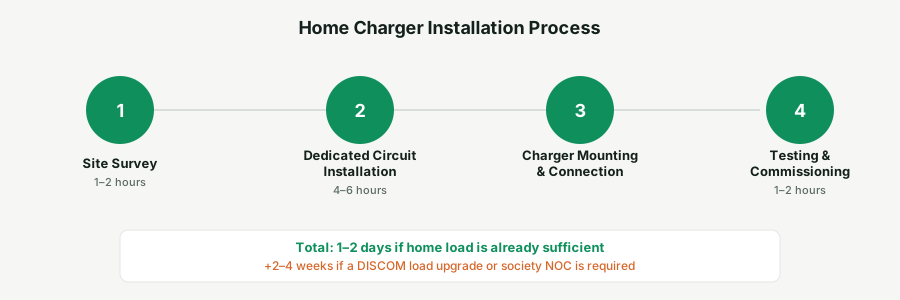
- Site survey (1–2 hours): an electrician measures the cable run from your distribution board to your parking spot, tests your existing earthing, checks your distribution board for space, and confirms whether your sanctioned load and meter can handle the extra draw.
- Dedicated circuit installation (4–6 hours): a licensed electrician runs a separate circuit from your main distribution board to your parking spot, fitted with its own MCB and RCCB for safety — this circuit should not share a breaker with your home's general wiring.
- Charger mounting and connection: the wallbox is mounted on a wall or post near your parking space, wired into the dedicated circuit, and weatherproofed if it's outdoors.
- Testing and commissioning (1–2 hours): continuity and insulation tests, then the circuit is energized and the charger is tested with an actual charge cycle before handover.
How long it actually takes
If your home's sanctioned load is already sufficient, the entire process — from site survey to your first successful charge — typically takes 1–2 days of actual work.
If your sanctioned load needs to be increased, add your DISCOM's approval timeline on top: roughly 7 business days in metro areas, 15 days in municipal areas, and 30 days in rural areas, plus a load enhancement fee of around ₹500–₹5,000. For apartment or gated-community buyers, factor in your RWA or society's own NOC process as well, which can add further time.
Realistic total timeline: 1–2 days if your home is already electrically ready; 2–4 weeks if a DISCOM load upgrade or society approval is required.
Before you book an installer
Confirm your home's sanctioned load with your existing electricity bill first — this is the single biggest factor in whether your installation takes two days or a month. If you live in an apartment or managed community, start the society approval conversation before you finalize your charger purchase, not after.
For the ongoing cost side of the equation — what charging actually costs per month once it's installed — see our home charging cost breakdown, or run your full purchase numbers, financing included, through the ROI calculator.
Figures above are estimates aggregated from industry installer pricing and OEM-partnered installation programs as of 2026. Get quotes from at least two installers in your city before committing, since exact costs depend on your home's wiring, distance to your parking spot, and local labor rates.